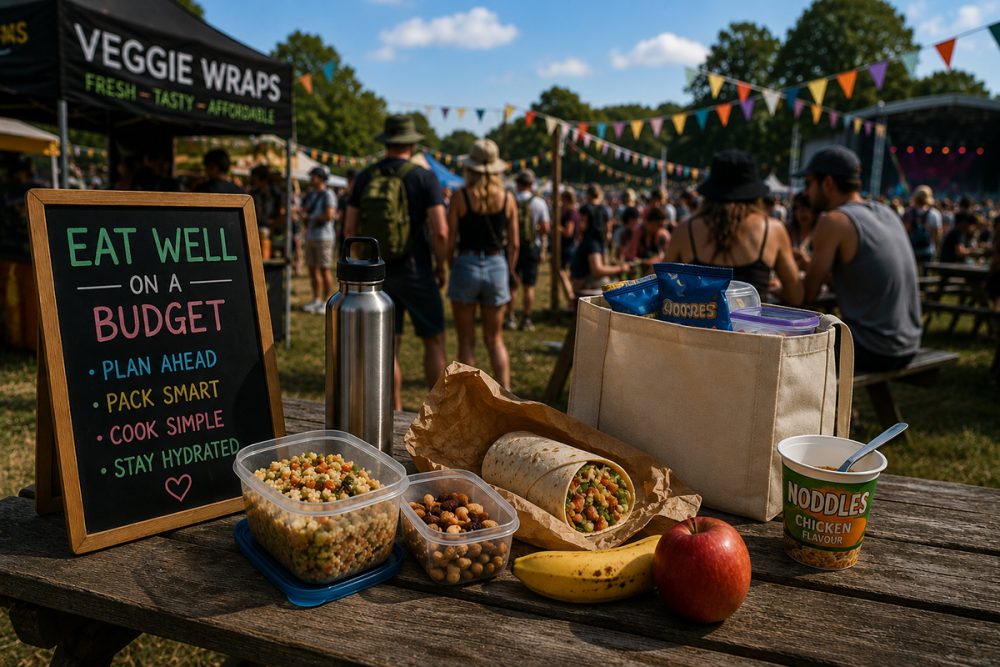
The short answer: bring your own breakfast and snacks, buy one proper meal a day from the traders, and don't attempt to cook anything complicated. That combination costs roughly half what eating entirely on site does, takes almost no equipment, and means you actually eat properly rather than living on whatever's nearest at midnight.
Food is the second biggest cost of a festival after the ticket, and it's also the thing that most affects how you feel by Sunday. Both problems have the same solution.
Where the money goes
A main meal from a UK festival trader is typically £10–£14. Coffee is £3–£4. Three bought meals a day for four days is comfortably £150 per person before you've had a drink.
The good news is that breakfast and snacks are the easiest meals to bring from home and the most expensive to buy on site relative to what you get. Fix those two and you've fixed most of the budget.
Breakfast: the biggest single saving
You do not need a stove for a good festival breakfast.
- Brioche, croissants or bagels – they survive being squashed
- Peanut butter or a jar of chocolate spread (plastic, not glass)
- Bananas and apples for the first two days, dried fruit after that
- Cereal bars, flapjacks, malt loaf
- Long-life milk cartons and instant coffee, or a flask filled at a water point and boiled the night before
- Boiled eggs, which keep for a couple of days in a cool bag
If you do want a hot drink first thing, a single small camping stove and a kettle is the one piece of cooking kit genuinely worth carrying. It gets you out of a cold tent with tea in hand, which is worth more to morale than it sounds.
Lunch and snacks
Lunch is the meal to skip buying. Something in your day bag stops the expensive, badly-judged food decision at 4pm when you're hungry and standing in a queue.
- Tortilla wraps – more robust than bread and pack flat
- Squeezy sauces, cured meat, hard cheese (keeps well), tuna pouches
- Crisps, nuts, pretzels – the salt matters more than you think
- Oatcakes and hummus pots
- Jelly sweets, which are the universal 6pm festival currency
The one meal worth buying
Festival food traders in the UK have got genuinely good, and one proper hot meal a day is worth every penny for morale as much as nutrition. Make it count:
- Eat before the peak. Queues are shortest between 3pm and 5pm and during headline sets.
- Walk away from the main stage. Traders near the smaller stages and the campsite are usually cheaper and quieter.
- Look for the stall with a queue of staff and crew. Reliable signal.
- Pick something with vegetables in it at least once a day. By day three your body will thank you.
Cool bag tactics
A soft cool bag with frozen water bottles instead of ice packs is the single best food decision you can make. The bottles keep everything cold for a day and a half and then become drinking water. Pack it in reverse order – what you'll eat last at the bottom – and keep it in the shade under a chair or in the tent porch, not in direct sun.
Realistically, plan for fresh food on days one and two and shelf-stable food after that. Nothing keeps in a tent in July beyond about 36 hours.
If you're going to cook
Keep it to one pot and one heat source. The realistic festival meals are:
- Instant noodles or couscous, which need boiling water only
- Tinned chilli or curry, heated in the pan, eaten with a wrap
- Bacon or sausage sandwiches, which are the single best thing you can offer your neighbours
- Porridge pots
Check the festival's rules before you buy a stove – large gas canisters are banned everywhere and some sites ban cooking equipment in certain campsites. Never cook inside or in the porch of a tent.
Eating with dietary requirements
Vegan, vegetarian and gluten-free options are now standard at UK festivals and usually clearly signed. If you have a serious allergy, bring enough safe food to cover you for the whole weekend rather than relying on traders – cross-contamination in a field kitchen is a real risk, and stallholders can't always give you a reliable answer.
The things that actually make you feel better
By day three, most festival-goers are running on sugar, alcohol and four hours of sleep. Three cheap habits fix most of it:
- Salt. You lose a lot dancing in the heat. Crisps count.
- Protein once a day. Eggs, meat, beans, cheese, nuts.
- Fruit or veg once a day. Even a banana.
A three-day shopping list
- Brioche or bagels, peanut butter, bananas, cereal bars
- Instant coffee or teabags, long-life milk
- Wraps, cured meat, hard cheese, tuna pouches, squeezy sauce
- Crisps, nuts, jelly sweets, flapjacks
- Two tins of something hot, if you're taking a stove
- Electrolyte tablets
- Refillable water bottle
- Bin bags and a roll of kitchen towel
Frequently asked questions
Can I bring my own food into a festival?
Into the campsite, yes, at virtually every UK festival. Into the arena, snacks are usually fine but full picnics may be refused.
Is there a supermarket on site?
Many larger festivals have an on-site shop, though prices are higher and stock runs down. Some have a supermarket a shuttle ride away.
Do I need a camping stove?
No. Plenty of people do a whole weekend with no cooking at all. A kettle for hot drinks is the only piece most people miss.