The short answer: choose on size, atmosphere and practicality first, and line-up second. A 15,000-capacity festival and a 100,000-capacity festival are completely different experiences even with identical acts, and the mismatch between what someone wanted and what they booked is the most common reason people say they don't like festivals.
There are hundreds of festivals in the UK each year. The choice is genuinely wide, and picking well is mostly about being honest with yourself about what you want from a weekend.
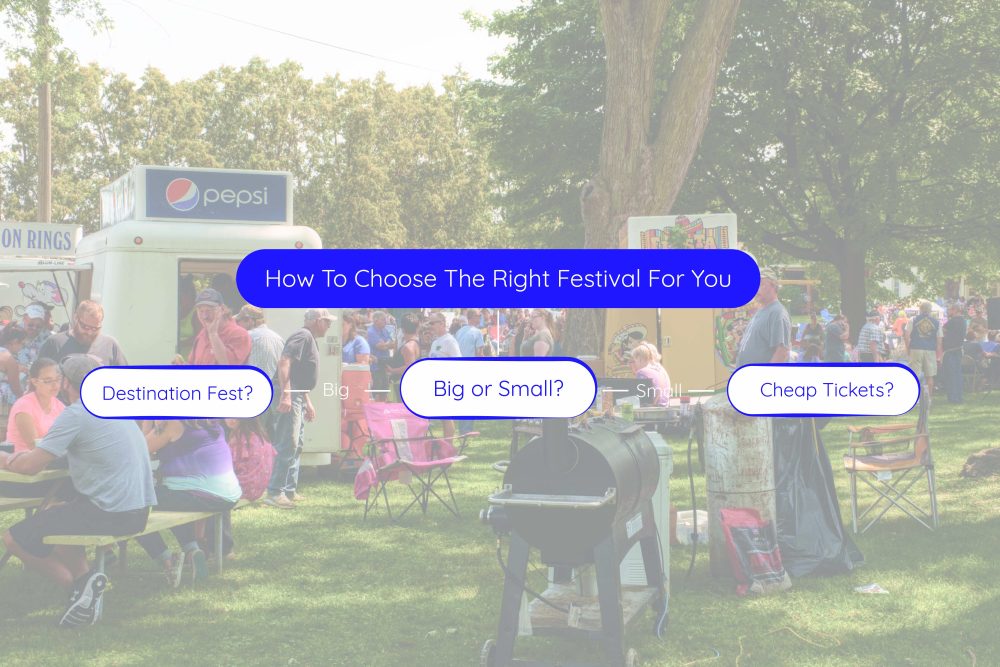
Start with size
This is the single biggest variable and the one people consider least.
- Under 5,000. You'll see the same faces all weekend, walk everywhere in five minutes, and the whole thing feels like a large village fete with better music. Very good for first-timers, families and anyone who finds crowds hard.
- 5,000–20,000. The sweet spot for many people. Several stages, real variety, but you can still cross the site quickly and find your friends.
- 20,000–60,000. Big-name bookings, long walks, real queues, proper festival scale.
- 60,000+. A temporary city. Extraordinary and overwhelming in equal measure. Expect twenty minutes between stages and to see a fraction of what's on.
Then think about what kind of weekend you want
Ask yourself which of these sounds best, because festivals genuinely divide along these lines:
- Music-led. You're there for the line-up, you'll plan your day around stages, and the rest is scenery.
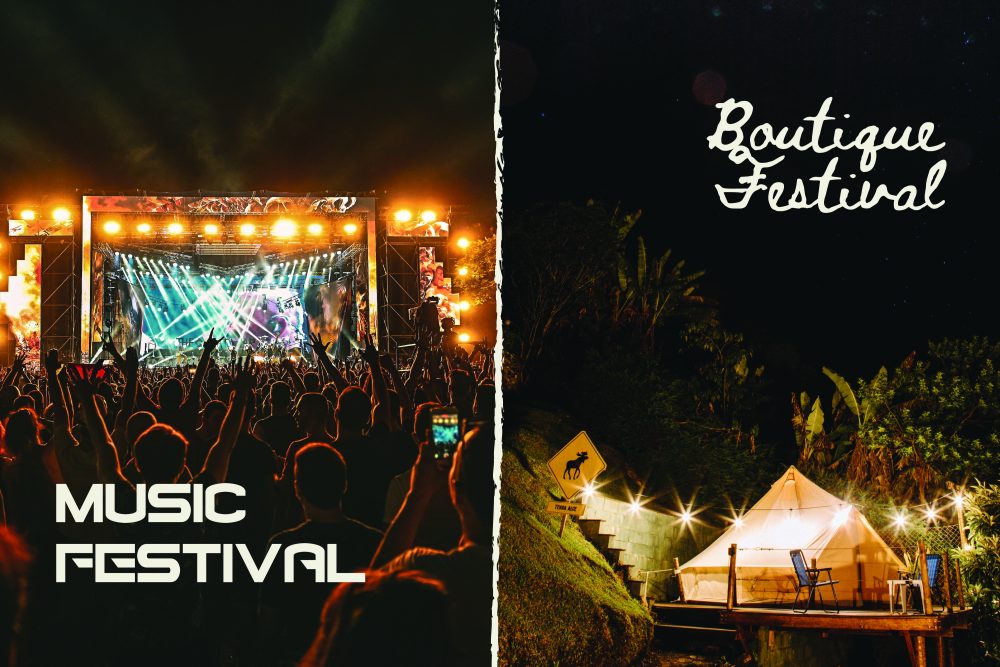
- Experience-led. Music matters but so do the woods, the cabaret tent, the workshops, the food and the late-night installations. Boutique festivals are built for this.
- Party-led. Dance tents until 6am and the campsite as much as the arena.
- Family-led. Kids' fields, early finishes, quiet camping, activities all day.
- Genre-specific. Folk, jazz, metal, hip hop, classical, tribute acts. Smaller crowds, deeply knowledgeable, and often much better value.
Practical factors that decide whether you enjoy it
How far away is it?
A five-hour drive each way turns a three-day festival into a five-day commitment. If it's your first, going closer to home makes everything easier and gives you an escape route.
What's the site like?
Flat parkland, a hillside, woodland, a racecourse, a castle grounds – this affects the walking, the drainage and the atmosphere enormously. A hilly site is beautiful and exhausting. A woodland site is sheltered and magical at night. A bare field drains badly and offers no shade.
What are the camping options?
Does it have a quiet campsite? A family field? Pre-pitched tents? Campervan space? These add-ons change the experience more than the headliner does.
What does it really cost?
Ticket plus booking fee plus car park plus camping upgrade plus travel plus spending money. A cheaper ticket at a festival three hundred miles away may cost more overall.
Who goes?
Some festivals skew 18–25, some skew 35–55, some are genuinely all ages. Neither is better, but being the only one of your kind in a field is a long weekend.
How to research a festival properly
- Watch last year's aftermovie, then watch attendee videos on TikTok and YouTube, which are far more honest about queues, mud and crowds.
- Look at photos of the campsite, not just the main stage.
- Read the festival's own A–Z or FAQ page. The rules tell you a lot about the culture – a festival with a strict noise curfew and no gazebos is a different proposition to one without.
- Find out the site's history. Has it had drainage or access problems? Local news coverage is more candid than the festival's own channels.
- Check what happens after midnight. Some festivals close the arena at 11pm; others run until dawn.
Don't over-weight the line-up
Line-ups are announced late, change, and are only a fraction of the weekend. Plenty of people book for one headliner, that headliner cancels, and they have a brilliant time anyway. Conversely, a perfect line-up at a festival whose size and set-up doesn't suit you will still be a difficult weekend.
A useful test: if the line-up were replaced with acts you'd never heard of, would you still want to go? If yes, it's the right festival.
If it's your first
Go smaller and closer than you think you should. A 10,000-capacity festival an hour from home teaches you what you like about festivals, at a fraction of the cost and effort of a big one. You can always go bigger next year with a much better idea of what you're looking for.
Frequently asked questions
When do UK festival tickets go on sale?
Many go on sale in the autumn for the following summer, often before the line-up is announced. Popular festivals sell out at that stage.
What's a boutique festival?
A smaller festival where the setting, décor, food and non-music programming are as much the point as the line-up. Usually under 20,000 capacity.
Are smaller festivals cheaper?
Usually yes, sometimes substantially, and the on-site prices tend to be lower too.
How do I find festivals near me?
Use a directory that lets you filter by region, date and genre rather than relying on the same handful of famous names.