The short answer: aim to be in the queue about an hour before gates open on the first day, or arrive mid-afternoon once the initial surge has cleared. The worst time to arrive is between two and four hours after gates open, when the queue is at its longest and the good pitches have gone.
Arrival is the part of a festival that most affects the rest of your weekend, and it's the part people plan least. Here's how it actually works.
How gates work
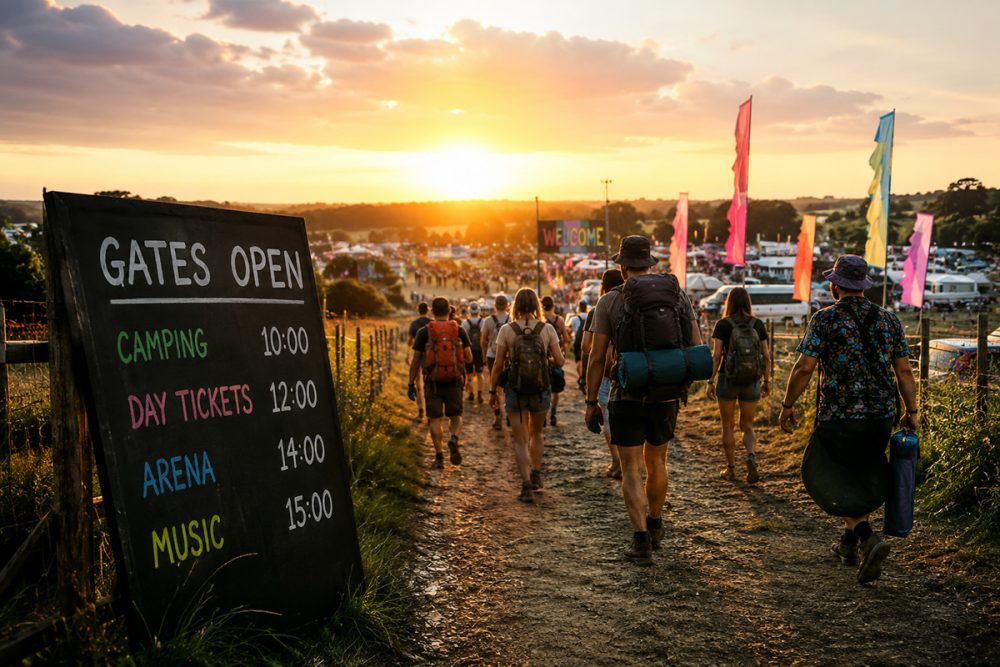
Most UK camping festivals open campsite gates on the Wednesday or Thursday morning, with the arena opening later that day or on the Friday. Gate opening times are published on the festival's website a few weeks out, and they are worth checking every time because they change.
What is not published is that a queue forms hours before opening. At the biggest festivals, cars start arriving the night before and are held in queueing fields overnight. At mid-size festivals, a queue of an hour or two before opening is normal.
The three arrival strategies
1. Early – be there before gates open
Turn up 60–90 minutes before opening. You'll wait, but you'll be through in the first wave, you'll get the pick of the pitches, and you'll be set up by lunchtime with the whole first day ahead of you.
Best for: groups who want to camp together in a good spot, anyone with a lot of kit, first-timers who want a stress-free setup.
Bring: a flask, snacks and something to sit on. You will be in that queue a while.
2. Mid-afternoon – let the rush pass
Arrive four to six hours after opening. The queue has usually collapsed to almost nothing by then. You'll have to walk further to find space, and the flattest ground will be taken, but you'll drive straight in and still pitch in daylight.
Best for: people travelling a long way, couples and small groups who don't need a big block of space, anyone who hates queueing more than they mind walking.
3. The worst option – two to four hours after opening
This is peak arrival. You get the longest queue and a picked-over campsite. Avoid it if you possibly can.
Should you pay for early entry?
Many festivals sell a Wednesday or early-entry upgrade for £20–£40, letting you in a day before general camping opens.
Worth it if: you're in a group of five or more who want to camp together, you're bringing a gazebo or a lot of kit, you want a specific campsite, or you simply like the calm of a half-empty site with the early-bird programme running.
Not worth it if: you're travelling light, you're a pair, or you'd rather spend the money on food. An extra night is an extra night of poor sleep before the music even starts.
Arriving on the second or third day
Completely normal, and much easier – there's typically no queue at all. The trade-off is that campsites near the arena will be full, so expect a long walk to a pitch. Ask a steward where there's genuine space rather than wandering; they know which fields have just been opened.
If you arrive after dark
It happens. Make it survivable:
- Have a head torch accessible, not buried in the bottom of your bag.
- Practise pitching your tent at home if it's new. Ten minutes in the garden saves an hour in a dark field.
- Accept the first reasonable pitch. Don't wander for an hour looking for perfection.
- Check the ground with your feet for slope and softness before committing.
- Be quiet. Your neighbours arrived hours ago and some are asleep.
- Move in the morning if you've ended up somewhere terrible. It's much easier than a second bad night.
What to do first, once you're in
Resist the urge to head straight for a bar. Twenty minutes of setup pays off all weekend:
- Pitch the tent properly, with every guy line pegged out.
- Put up a flag or something visible.
- Take a photo of your tent, the view from it and the nearest campsite marker post.
- Walk to the nearest toilets, water point and campsite gate so you know where they are in the dark.
- Agree a group meeting point and time.
- Then open a drink.
Traffic on the day
Local roads near a festival can add two hours to a journey, and satnavs are frequently wrong – follow the AA signs and the festival's own postcode for the correct car park entrance, not the site's general address. Check the festival's travel page the night before for road closures and one-way systems, and fill up with fuel before you're within twenty miles.
Frequently asked questions
What time do festival gates usually open?
Campsite gates commonly open between 8am and midday on the first day. Always check the specific festival's website, as it varies widely.
Can I queue overnight?
At some large festivals cars are held in overnight queueing fields; at others you'll be turned away. Check the festival's travel information before setting off the night before.
Is it worth arriving early for a day ticket?
Yes, if you want to be near the front for a specific act, but day gates usually open later and the queue is much shorter than on camping days.
How long does it take to get through the gate?
Once you're at the front, a search and wristband exchange takes a few minutes. It's the queue to get there that varies from ten minutes to three hours.